Block Puzzle Classic
- 4.6
- Rating
- 1.00M
- Installs
- Free
- Price
 Analysis by App-foxy
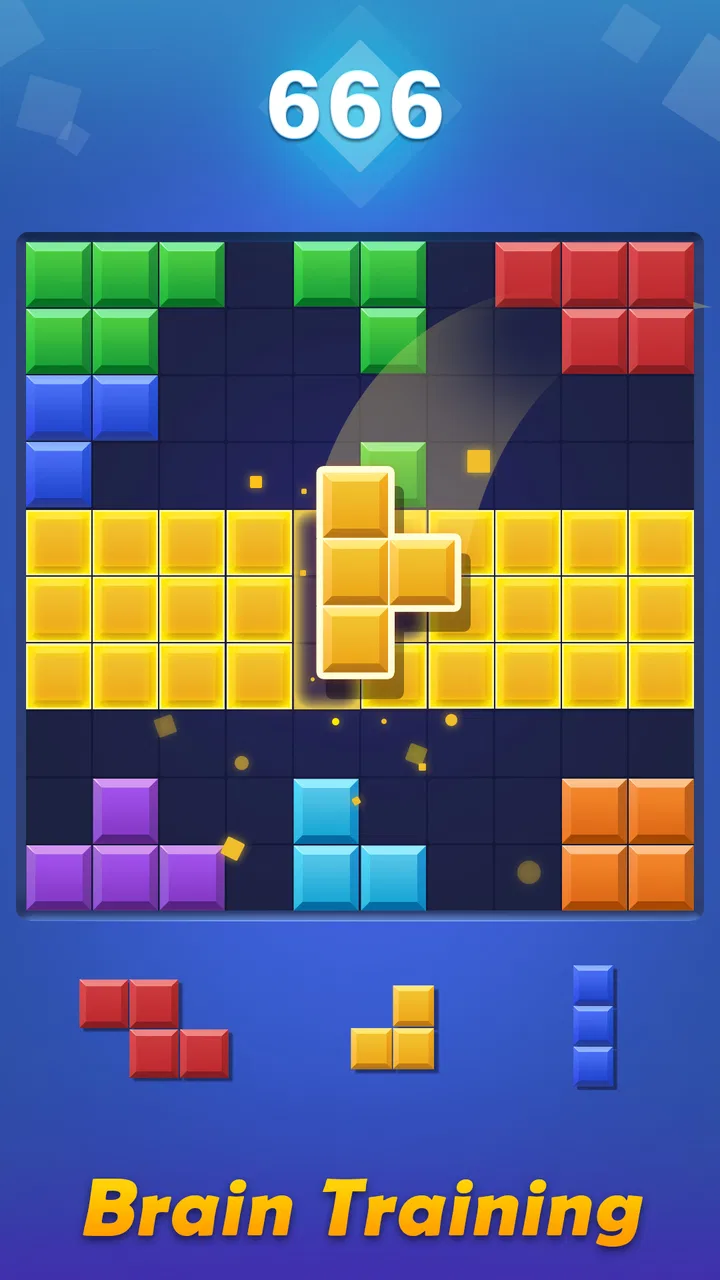
I tried Block Puzzle Classic as the kind of game you open when you want a quiet mental break rather than a long campaign. It is a free casual puzzle game from SOFISH GAMES, built around arranging blocks and making sensible choices before the board becomes difficult to manage. That simple premise is familiar, but the quality of a block puzzle depends less on novelty than on how comfortable it feels during repeated short sessions.
My first impression was that this is aimed at people who enjoy thinking without having to learn a complicated rule set. You can understand the basic objective quickly, yet good results still depend on planning space, resisting rushed moves, and recognizing when a tempting placement will cause trouble later. That makes it suitable for a coffee break, a commute, or a few minutes before bed, provided you are happy with a focused puzzle loop instead of a story or a large collection of modes.
How I would decide whether this puzzle belongs on your phone
The main question is not whether block puzzles are enjoyable in general. It is whether you want a game that turns a small amount of free time into a sequence of careful decisions. In my experience, this style works best when I want something more active than scrolling but less demanding than a competitive action game. I can play at my own pace, stop when I need to, and return later without remembering characters, objectives, or a plot.
You May Also Like

 Blood Strike: 2.5 Anniversary
Blood Strike’s Loadouts Turn Every Drop Into a Tactical Gamble
A close look at Blood Strike’s custom loadouts: how fast access to signature weapons reshapes its battle royale rhythm, rewards preparation, and narrows the gap between fights.

 Pandora - Music & Podcasts
Pandora’s Music Is Easy to Start, but Harder to Recover
Pandora’s strength is its low-effort path from a seed to a station. Its weak spot is how much confidence it asks you to place in connection, setup, and quiet recovery.

 8 Ball Pool
 Is Built on Rivalries, Rematches, and Routine
A close look at the rivalries, rematches, shared routines, and unanswered safety questions that turn a quick pool match into a persistent mobile community.

 Samsung Music
’s Quiet Strength Is Playing What You Already Own
Its reach comes less from spectacle than from dependable access to a personal library. That simplicity is both the app’s strongest retention engine and its ceiling.

 AccuWeather: Weather Radar
AccuWeather Review: A Quick, Clear Forecast for Everyday Decisions
For everyday plans, the best forecast is the one you can understand quickly. AccuWeather makes rain timing, radar, and local conditions easy to act on, with a few trade-offs.

 Hill Climb Racing
Why Hill Climb Racing Still Turns Crashes Into One More Run
A tiny car, a bumpy hill and one more upgrade: Hill Climb Racing keeps resurfacing because its simple chaos makes every near-miss feel personal.
More From Our News Desk
View All News


I would also consider how much variety you expect. A block puzzle can be satisfying because its rules are stable, but that same stability may feel repetitive if you need constant surprises. This one should be judged as a focused casual game, not as a broad entertainment package. Its appeal comes from the familiar process of examining the available shapes, protecting useful spaces, and clearing lines or areas through thoughtful placement.
The audience information makes the choice fairly straightforward. It is listed for Everyone, and the minimum operating-system requirement is Android 6.0, so it is positioned as an accessible option for a wide range of Android users. Its current version is 1.0.37, which is useful context when deciding whether your phone is likely to run it comfortably, although your own device experience can still depend on hardware and system condition.
There is also a practical reason to try it: the game is free. That removes the biggest barrier for someone who simply wants to test the format. I would still approach it with the right expectation. Free does not automatically mean it will replace every puzzle game you already enjoy. It means the cost of experimenting is low, so the decision can be based mainly on whether the play rhythm suits you.
The small decisions that make the simple rules work
What I like about this type of game is that the important skill is not moving quickly. It is managing future options. When I see a shape that fits neatly into a gap, I do not always place it immediately. Sometimes leaving that gap open is more valuable because a later piece may need it. This is the first useful habit I would recommend: treat empty space as a resource rather than as a problem that must be filled at once.
A second habit is to avoid building an uneven wall without a reason. Tall isolated sections can make later placements awkward, while a more balanced surface usually gives me more ways to respond. I found that thinking one or two moves ahead is enough to improve the experience; trying to calculate everything makes a casual game feel like work. The best rhythm is a quick scan, a deliberate placement, and then another scan after the board changes.
I also recommend using difficult pieces to repair the board instead of saving every awkward shape for later. Holding out for a perfect move often leaves the board less flexible. If a placement clears a line but creates a narrow pocket, it may be less useful than a move that clears nothing immediately while preserving several open areas. That trade-off is where the game becomes more interesting than simple matching.
Why it works well in everyday situations
A realistic use case is a short wait at a bus stop. I can start a round, make several moves, and put the phone away without feeling that I have abandoned a team, missed a timed event, or interrupted a story scene. The game asks for attention, but the commitment is small. That makes it a better fit for fragmented time than many larger casual games.
It can also work as a wind-down activity when I want something structured but not emotionally intense. The board gives my attention a clear target, and the familiar rules mean I do not need to learn much before playing. On the other hand, anyone who finds repeating board decisions calming only for a few minutes may reach the limit of its appeal quickly. I would not choose it as my only game if I needed exploration, narrative, social interaction, or a strong sense of progression.
Another useful scenario is when you want a game that can be shared informally with a child or an older relative. The Everyone rating and straightforward concept make the basic idea easy to explain. I would still let each person discover their own approach, because the fun comes from noticing how different players value space, risk, and immediate clears. It is less about teaching a complicated system and more about comparing decisions.
Where Block Puzzle Classic is strongest, and where another category may be better
The clearest strength is its narrow focus. Block Puzzle Classic is at its best when you want a direct, low-friction brain game rather than a bundle of unrelated activities. I do not have to remember a storyline or manage a large set of menus to enjoy a session. The familiar block arrangement gives me an immediate task, while the open-ended board creates enough room for personal judgment.
That focus also helps it compete with the usual alternatives in the casual puzzle space. Compared with match-three games, a block puzzle generally rewards spatial planning more than quick pattern recognition. A match-three title may feel livelier because pieces disappear through combinations and the board changes rapidly. This game is better for someone who prefers to pause, inspect the layout, and decide where a shape should go without relying on a chain reaction.
Compared with word puzzles, it asks for a different kind of attention. Word games are a stronger choice if you want vocabulary practice or a language-based challenge. Here, the challenge is visual and positional. I can play without searching for a phrase or recalling a fact, which makes it easier to enjoy when my mind is tired but I still want a small amount of problem-solving.
Compared with physics-based casual games, the appeal is more predictable. There is less emphasis on surprise, timing, or experimentation with movement. That can feel limited to players who want expressive interactions, but it is an advantage for me when I want a stable rule set. I can improve through better choices rather than through learning a particular gesture or mastering a timing window.
Its public reception suggests that this straightforward approach is connecting with a meaningful audience: it has a 4.6 average from around 2.4 thousand ratings, and the listing shows over a million installs. I would not treat those figures as a guarantee that every player will enjoy it, but they do indicate that the format is easy for many people to understand and adopt. The developer, SOFISH GAMES, has kept the presentation centered on the core block-puzzle idea rather than asking the game to be something it is not.
Limitations I would think about before choosing it
The same simplicity that makes the game approachable can become the main weakness. If you need a clear campaign, unlockable characters, narrative goals, or a strong sense of long-term advancement, this may feel too narrow. A dedicated puzzle fan might also want more distinct rule variations, while a competitive player may prefer leaderboards or direct challenges. I would not switch from a feature-rich puzzle collection expecting this to provide the same breadth.
There is also a mental fatigue trade-off. Repeating similar board decisions can be relaxing, but after several sessions I may start making automatic moves rather than genuinely thinking. My practical solution is to use it in short bursts and stop after the board begins to feel like a chore. The game is more enjoyable when I leave with the feeling that I could have continued, instead of forcing a long session simply because it is available.
Another limitation is that a simple interface does not remove the possibility of frustrating mistakes. One careless placement can reduce the useful space for later pieces, and the result may feel harsh if I was playing casually. I found that this is less annoying when I accept that not every move needs to be perfect. If you dislike games where a small decision can spoil an otherwise good run, a gentler matching game may suit you better.
What switching from another casual game actually involves
The cost of switching is low if your current game is already a block-placement puzzle. The concepts transfer quickly, but your habits may need adjusting. Players coming from match-three games may initially look for immediate combinations and underestimate the importance of preserving open areas. Players coming from fast arcade games may need to slow down, because speed is not the main advantage here.
Switching is more worthwhile when your current game demands too much commitment. If you are tired of daily tasks, story interruptions, or complicated upgrade systems, this offers a cleaner alternative. I would install it as a secondary game rather than deleting a favorite immediately. A short trial across different situations—during a wait, at home, and when tired—will tell you more than one enthusiastic first session.
The free price makes that experiment especially practical. You do not need to plan a purchase just to see whether the board style suits you. At the same time, I would avoid choosing it solely because it is free. The real value is the convenience of a focused puzzle you can return to, not the absence of an upfront charge. If your priority is a large amount of content or a deep progression system, another casual category may offer better value even if it requires more patience or a different payment model.
My recommendation for different kinds of players
I recommend giving this game a try if you enjoy visual puzzles, prefer short sessions, and like improving through calmer decisions. It is especially suitable for someone who wants a straightforward Android game that can fill a few spare minutes without demanding a long setup. The Everyone rating also makes it a reasonable candidate for households looking for an uncomplicated puzzle concept that several age groups can understand.
I would skip it if your ideal mobile game needs a story, social competition, constant novelty, or a broad selection of modes. I would also look elsewhere if you already own a block puzzle that offers the exact same loop but gives you the progression and variety you value. There is no reason to switch just for a different icon when your current choice already satisfies your needs.
For a new player, my advice is to begin by protecting flexibility rather than chasing every immediate clear. Keep the board relatively even, inspect all available shapes before committing, and use a difficult piece to improve the overall layout when necessary. Those choices make the game feel more deliberate and reduce the frustration caused by filling convenient gaps too early.
Overall, I see Block Puzzle Classic as a dependable casual option rather than a revolutionary puzzle experience. It earns its place through accessibility, a clear central idea, and the ability to fit naturally into small pieces of the day. With a 4.6 average and more than a million installs, it has found a substantial audience, but its strongest recommendation comes from the play style itself: choose it when you want quiet spatial thinking with very little overhead.
My final verdict is positive, with a clear condition. I would recommend downloading it for a free, focused test if you enjoy arranging shapes and making careful use of limited space. I would not present it as the best choice for every casual player, because its narrow design will not satisfy people looking for stories, social features, or constant change. For the right player, though, SOFISH GAMES has delivered a simple game that is easy to start, surprisingly thoughtful in practice, and well suited to everyday pauses.
FAQs for Block Puzzle Classic
01What is Block Puzzle Classic and how does it work?
Block Puzzle Classic is a simple yet addictive puzzle game where players need to fit different shaped blocks into a grid. The goal is to fill horizontal or vertical lines to clear them. The game ends when there’s no space left for new blocks. It’s a great way to test your spatial reasoning and problem-solving skills.
02Is Block Puzzle Classic free to play?
Yes, Block Puzzle Classic is free to download and play. However, the game may include in-app purchases and ads. These purchases typically offer additional features, such as removing ads or buying hints, which enhance the gaming experience but are not necessary to enjoy the game.
03What platforms is Block Puzzle Classic available on?
Block Puzzle Classic is available on both Android and iOS platforms. You can download it from the Google Play Store for Android devices or the Apple App Store for iOS devices. Ensure your device meets the system requirements for a smooth gaming experience.
04Are there any age restrictions for playing Block Puzzle Classic?
Block Puzzle Classic is generally suitable for players of all ages. It’s a family-friendly game that doesn’t contain any inappropriate content. However, parents should be aware of in-app purchases and ensure that they manage settings to prevent accidental purchases by younger players.
05Can Block Puzzle Classic be played offline?
Yes, Block Puzzle Classic can be played offline, making it an excellent option for entertainment without an internet connection. However, certain features, such as in-app purchases or ad removal, may require an internet connection to be processed.
Pros
- Simple and intuitive controls.
- Offers offline gameplay.
- Minimal ads for free version.
- Smooth
- lag-free performance.
- Various difficulty levels.
Cons
- Limited customization options.
- No multiplayer mode.
- Repetitive gameplay over time.
- Occasional ad interruptions.
- Lacks advanced features.

Block Puzzle Classic
Gallery